This is a collection of constantly growing and developing resources. Be sure to check back regularly for new resources.

Got feedback or questions? Reach out to the CRAFT team via our contact form.

  • 120 minutes
  • AI & Society

How can I audit the algorithms behind everyday social media filters?

Social media platforms increasingly rely on AI-powered filters and recommendation systems that shape how people see themselves and others. In this lesson, students learn a systematic, five-step process for conducting an algorithm audit by examining TikTok’s AI Manga filter. Using a curated database of inputs and outputs, students form hypotheses, collect and analyze data, and evaluate how algorithmic behaviors may reflect bias or unintended impacts. The lesson emphasizes evidence-based reasoning and helps students see how everyday users can meaningfully question and assess AI systems.

  • Originally developed by the University of Pennsylvania Graduate School of Education as part of the AI Auditing for High School (beta) curriculum
algorithm-audit
  • 60 minutes
  • AI & Society

How do algorithms reflect bias in everyday search results?

Search engines and other AI systems shape how people see the world, often in ways that feel neutral or objective. However, these systems can reflect and amplify social biases that are embedded in data, design choices, and societal patterns. In this lesson, students investigate algorithmic bias through image search results, using everyday search terms to uncover patterns related to race, gender, and representation. Through discussion, annotation, and reflection, students develop a sense of agency by learning how everyday people can question, audit, and respond to biased algorithmic systems.

  • Originally developed by the University of Pennsylvania Graduate School of Education as part of the AI Auditing for High School (beta) curriculum
AI Quests
  • 50 minutes
  • AI & Science

How can AI help a community prepare for a flood?

Floods are among the world’s most devastating natural disasters, affecting millions of people each year. Today, scientists are using AI flood forecasting models to predict when and where floods may occur, giving communities more time to prepare and stay safe. But these predictions are not perfect. Data can be messy, and humans have many important steps to take in order to build trustworthy AI models that can help with decision-making. In this lesson, students will play Market Marshes, an AI Quest to explore how AI predicts floods, consider challenges with data accuracy, and reflect on the human responsibilities involved in making decisions with AI.

  • Created by Google Research and the Stanford Accelerator for Learning
AI image showing overcorrection in AI
  • 60 minutes
  • AI & Society

How can we mitigate bias in AI design?

This lesson introduces students to the concept of bias in AI training data and its societal implications. Using a real-world example of Google’s Gemini AI, students will explore how overrepresentation and underrepresentation in datasets affect various groups.

  • Created by Chelsea Dixon
  • Adapted by Chris Mah
A digital illustration of a large, single digital foundation that forms a sturdy base.
  • 75 minutes
  • About AI

What is the global significance of foundation models?

This lesson introduces students to the concept of foundation models, focusing on their role in AI development and the countries at the forefront of their creation. Students will learn the significance of foundation models and explore the implications of a concentrated geographical distribution of these models.

  • Created by 'Joba Adisa
  • 75 minutes
  • AI & History-Social Science

How is AI reshaping warfare?

In this lesson, students will consider ethical dilemmas raised by the increasing use of AI in warfare. After listening to a podcast from the New York Times The Daily, about Ukraine’s use of emerging AI technologies in their war against Russia, students will develop their own positions about the ethics of AI warfare through discussion with peers.

  • Created by Chris Mah
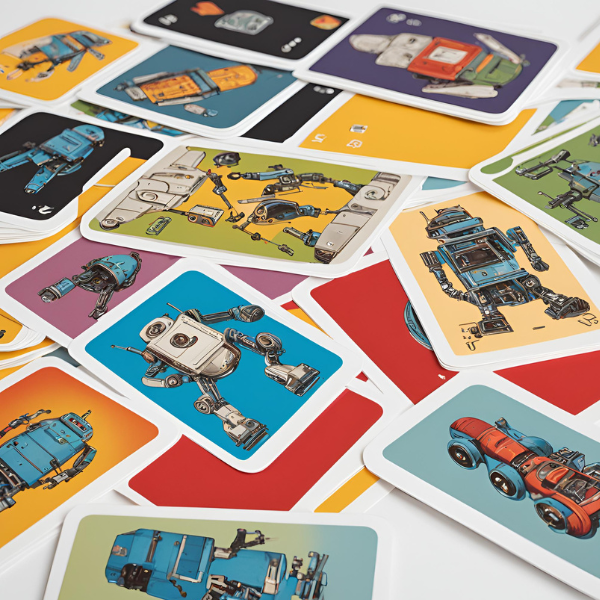
A stack of playing cards that are colorful and have robots
  • 60 minutes
  • AI & Society

What principles should guide ethical use of AI?

This gamified lesson effectively introduces students to the ethical challenges of AI. It boosts critical thinking and ethical reasoning through engaging discussions. It also enhances collaborative skills and decision-making, providing a rich learning experience.

  • Created by Matt Matilla, CRAFT Co-Design Fellow 2023-2024
  • Adapted by Chris Mah
  • 50 minutes
  • AI & Society

How does algorithmic bias impact different AI applications?

In this lesson, students start to understand the possible consequences of algorithmic bias. They consider a range of applications for which algorithmic bias presents a problem. This could be the 2nd lesson of a 2 part sequence.

  • Created by Parth Sarin and Jacob Wolf
  • Adapted by Chris Mah
AI Generated image of scales where the right side scale being lower than the left
  • 50 minutes
  • AI & Society

What is algorithmic bias?

In this lesson, students are introduced to the concept of algorithmic bias. Students play a game that illustrates the concept through a hiring simulation. This could be the 1st lesson of a 4 part sequence.

  • Created by Parth Sarin and Jacob Wolf
  • Adapted by Chris Mah
a hand holding a cell phone
  • 50 minutes
  • AI & Society

How should (or shouldn’t) my data be used in AI Algorithms?

In this lesson, students are introduced to the concept of a digital footprint. They consider data publicly available about them online, including on social media. Then, they consider the ethics of having their data used in AI algorithms.

  • Created by Parth Sarin and Jacob Wolf
  • Adapted by Chris Mah
  • 45 minutes
  • AI & Society

Where in the world is AI around me?

In this lesson students explore the prevalence of artificial intelligence in their personal lives. As students think through examples of AI in their lives, they explore different concepts of AI to better understand what AI is, what tasks it can do, and how it can do those.

  • Created by Parth Sarin and Jacob Wolf
  • Adapted by Christine Bywater and Reuben Thiessen