Is AI Fair? Bias, Data, and Responsibility

This stack invites students to examine AI as a system shaped by human choices and therefore open to scrutiny, rather than as a neutral tool. Beginning with the foundations of algorithmic bias, students move toward understanding how bias affects real-world applications, then confront its global consequences, especially for communities in the Global South who are rarely centered in AI development. From there, students turn to questions about how their own data is collected and used, before arriving at a capstone lesson that asks them to articulate the principles that should guide ethical AI use. Together, these five lessons build a progressive argument that recognizing bias is only the first step and that responsibility requires attention to whose voices are included, whose data is used, and what values guide design decisions. This stack is well suited for social studies, ethics, or interdisciplinary AI literacy courses.

  • 5 lessons
  • Created by Bernardo Silveira
We need your help to improve these resources. If you would like to help us, please fill out this form and we will reach out with follow up questions.
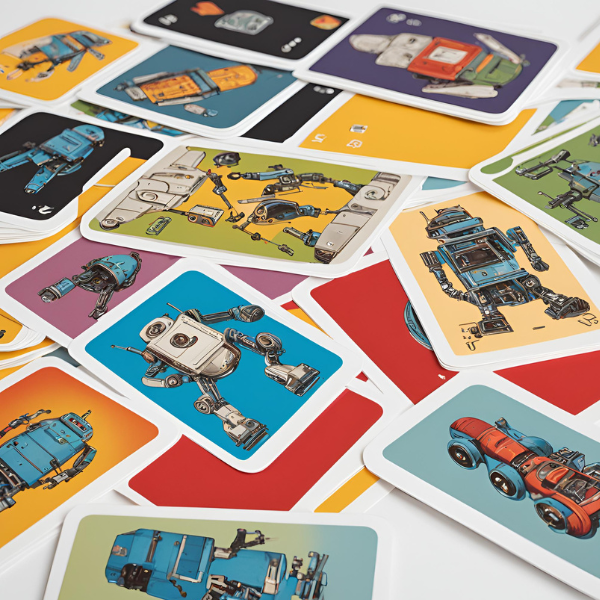
A stack of playing cards that are colorful and have robots
  • 60 minutes
  • AI & Society

What principles should guide ethical use of AI?

This gamified lesson effectively introduces students to the ethical challenges of AI. It boosts critical thinking and ethical reasoning through engaging discussions. It also enhances collaborative skills and decision-making, providing a rich learning experience.

  • Created by Matt Matilla, CRAFT Co-Design Fellow 2023-2024
  • Adapted by Chris Mah
  • 60 minutes
  • AI & History-Social Science

How does bias in AI affect the Global South?

This lesson explores the impact of biased data on AI systems with a focus on the Global South. Students will learn how biased data leads to biased results since AI reflects the data it is trained on. In particular, students will focus on the impact of this on countries that are generally less industrialized and have lower income levels than developed nations in the Global North.

  • Created by Chelsea Dixon, CRAFT Student Designer 2024
  • Adapted by Chris Mah
  • 50 minutes
  • AI & Society

How does algorithmic bias impact different AI applications?

In this lesson, students start to understand the possible consequences of algorithmic bias. They consider a range of applications for which algorithmic bias presents a problem. This could be the 2nd lesson of a 2 part sequence.

  • Created by Parth Sarin and Jacob Wolf
  • Adapted by Chris Mah
AI Generated image of scales where the right side scale being lower than the left
  • 50 minutes
  • AI & Society

What is algorithmic bias?

In this lesson, students are introduced to the concept of algorithmic bias. Students play a game that illustrates the concept through a hiring simulation. This could be the 1st lesson of a 4 part sequence.

  • Created by Parth Sarin and Jacob Wolf
  • Adapted by Chris Mah
a hand holding a cell phone
  • 50 minutes
  • AI & Society

How should (or shouldn’t) my data be used in AI Algorithms?

In this lesson, students are introduced to the concept of a digital footprint. They consider data publicly available about them online, including on social media. Then, they consider the ethics of having their data used in AI algorithms.

  • Created by Parth Sarin and Jacob Wolf
  • Adapted by Chris Mah