AI and the Environment: Costs, Solutions, and Hard Choices

This stack asks a simple question: does AI help or harm the planet? Students begin by confronting an uncomfortable fact, that AI itself consumes significant energy and water, before exploring how AI is being applied to combat climate change and expand renewable energy. The stack then turns to a concrete application, examining how AI-powered forecasting models help communities prepare for floods, a growing threat as climate change intensifies. The sequence closes with a debate lesson asking students to weigh everything they have learned and form their own evidence-based position on whether AI’s environmental costs are justified by its benefits. Rather than presenting AI as either a solution or a problem, this stack pushes students toward nuanced judgment about real trade-offs. This stack is well suited for science or environmental studies classrooms.

  • 5 lessons
  • Created by Bernardo Silveira
We need your help to improve these resources. If you would like to help us, please fill out this form and we will reach out with follow up questions.
AI Quests
  • 50 minutes
  • AI & Science

How can AI help a community prepare for a flood?

Floods are among the world’s most devastating natural disasters, affecting millions of people each year. Today, scientists are using AI flood forecasting models to predict when and where floods may occur, giving communities more time to prepare and stay safe. But these predictions are not perfect. Data can be messy, and humans have many important steps to take in order to build trustworthy AI models that can help with decision-making. In this lesson, students will play Market Marshes, an AI Quest to explore how AI predicts floods, consider challenges with data accuracy, and reflect on the human responsibilities involved in making decisions with AI.

  • Created by Google Research and the Stanford Accelerator for Learning
renewable energy
  • 60 minutes
  • AI & Science

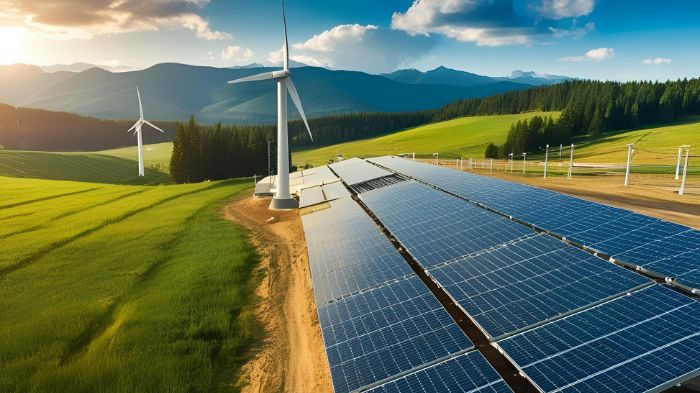
How is AI advancing renewable energy innovation and deployment?

The global transition to renewable energy is crucial for sustainability and AI is enhancing its efficiency and accessibility. However, both renewable energy projects and AI-driven solutions raise ethical concerns, from environmental impact to data privacy and energy equity. In this lesson, students will explore how AI is advancing renewable energy and conduct brief research on the ethical dilemmas associated with both renewable energy projects and AI applications.

  • Created by Chris Mah
healthy and thriving planet
  • 45 minutes
  • AI & Science

Will AI do more harm or good for the planet?

AI is already being used in many ways to combat climate change. Yet, building, training, and using AI comes with an enormous environmental footprint. Will AI ultimately do more harm or good for the planet? In this lesson, students will draw on their prior learning about the potential and pitfalls of AI for the planet and form their own opinions on whether the advantages of AI outweigh its environmental costs. Then, they will explore potential solutions for making AI more sustainable.

  • Created by Chris Mah
melting glacier due to climate change
  • 45 minutes
  • AI & Science

How can AI help combat climate change?

AI is already being used to diagnose diseases, make art, and accelerate learning. But can AI help the planet? In this lesson, students will explore a variety of ways that AI is already being used to combat climate change. By examining diverse example use cases, they will begin to construct a framework for the types of problems that AI can help address.

  • Created by Chris Mah
future tree
  • 45 minutes
  • AI & Science

What are the environmental costs of AI chatbots?

Scientists are already using AI to map environmental risks, analyze huge amounts of climate data, and make predictions to combat climate change. But AI technologies like chatbots also use an enormous amount of energy, and many people are concerned with their environmental costs. In this lesson, students will investigate how these technologies consume energy and water and the broader impact of AI on sustainability.

  • Created by Chris Mah