This is a collection of constantly growing and developing resources. Be sure to check back regularly for new resources.
Got feedback or questions? Reach out to the CRAFT team via our contact form.
Floods are among the world’s most devastating natural disasters, affecting millions of people each year. Today, scientists are using AI flood forecasting models to predict when and where floods may occur, giving communities more time to prepare and stay safe. But these predictions are not perfect. Data can be messy, and humans have many important steps to take in order to build trustworthy AI models that can help with decision-making. In this lesson, students will play Market Marshes, an AI Quest to explore how AI predicts floods, consider challenges with data accuracy, and reflect on the human responsibilities involved in making decisions with AI.
- Created by Google Research and the Stanford Accelerator for Learning
How efficient is the human brain compared to AI?
As large language models (LLMs) like ChatGPT become central to how people think, work, and create, we must ask: how efficient is AI really? In this lesson, students will compare the energy, time, space, and cost efficiency of LLMs to the human brain using rough “back-of-the-envelope” calculations. These explorations launch a Socratic dialogue about the ethical implications of widespread AI adoption. The lesson integrates physics, ethics, and critical thinking, empowering students to interpret data and form their own opinions on AI’s role in society.
- Created by Jacob Lawton, CRAFT Fellow 2024-2025
- Adapted by 'Joba Adisa
Is AI disrupting art?
As AI-generated art becomes more widespread, artists and technologists are debating its role in the creative process. Is AI disrupting traditional artmaking—or expanding it? And who gets credit for AI-generated work? In this lesson, students will explore these questions by examining how AI is impacting creativity, artistic identity, and the definition of art itself. After analyzing diverse perspectives, students will be introduced to prompt engineering as a tool for generating both reinterpretations of existing art and new, original work. This lesson is designed for integration in both computer science and art classrooms.
- Created by Amanda O’Mara, CRAFT Co-Design Fellow 2024-2025
- Adapted by 'Joba Adisa
How can AI help in detecting natural disasters?
Artificial intelligence is helping scientists and communities tackle challenges like climate change and natural disasters. AI-powered climate models are used in Europe and Asia as disaster prediction tools aiding vulnerable regions. These technologies offer powerful benefits but also raise important ethical questions about equity, environmental impact, and access. In this lesson, students will explore real-world global examples of AI in action. Students will analyze the opportunities and risks, and discuss how we can use AI responsibly to protect our planet
- Created by Nadim Kassymov, CRAFT Student Designer 2024-2025
- Adapted by Julie Braly
Can AI help with recovery after a natural disaster?
Artificial intelligence is increasingly being used worldwide to support recovery efforts after natural disasters such as earthquakes, hurricanes, and wildfires. AI technologies can help analyze satellite images for damage assessment, coordinate emergency response, and predict where resources are needed most-potentially saving lives and speeding up recovery. In this lesson, students will explore how AI is transforming disaster recovery across the globe, examine real-world examples, and discuss the opportunities and challenges of using AI to help communities rebuild.
- Created by Nadim Kassymov
- Adapted by Julie Braly
How is AI transforming global food security?
Agriculture is essential to global food security, but farmers face challenges such as soil degradation, pest infestations, and invasive weeds that threaten productivity and livelihoods. Some researchers think that AI can help overcome these challenges, but how? In this lesson, students will explore how AI is revolutionizing agriculture by improving efficiency, sustainability, and resilience. Students will also examine the benefits and limitations of AI in agriculture, considering its impact on farmers, the environment, and global food production.
- Created by 'Joba Adisa
- Adapted by Chris Mah
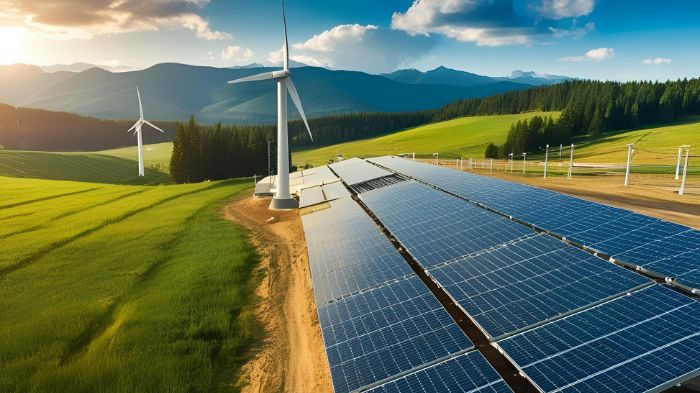
How is AI advancing renewable energy innovation and deployment?
The global transition to renewable energy is crucial for sustainability and AI is enhancing its efficiency and accessibility. However, both renewable energy projects and AI-driven solutions raise ethical concerns, from environmental impact to data privacy and energy equity. In this lesson, students will explore how AI is advancing renewable energy and conduct brief research on the ethical dilemmas associated with both renewable energy projects and AI applications.
Will AI do more harm or good for the planet?
AI is already being used in many ways to combat climate change. Yet, building, training, and using AI comes with an enormous environmental footprint. Will AI ultimately do more harm or good for the planet? In this lesson, students will draw on their prior learning about the potential and pitfalls of AI for the planet and form their own opinions on whether the advantages of AI outweigh its environmental costs. Then, they will explore potential solutions for making AI more sustainable.
How can AI help combat climate change?
AI is already being used to diagnose diseases, make art, and accelerate learning. But can AI help the planet? In this lesson, students will explore a variety of ways that AI is already being used to combat climate change. By examining diverse example use cases, they will begin to construct a framework for the types of problems that AI can help address.
What are the environmental costs of AI chatbots?
Scientists are already using AI to map environmental risks, analyze huge amounts of climate data, and make predictions to combat climate change. But AI technologies like chatbots also use an enormous amount of energy, and many people are concerned with their environmental costs. In this lesson, students will investigate how these technologies consume energy and water and the broader impact of AI on sustainability.
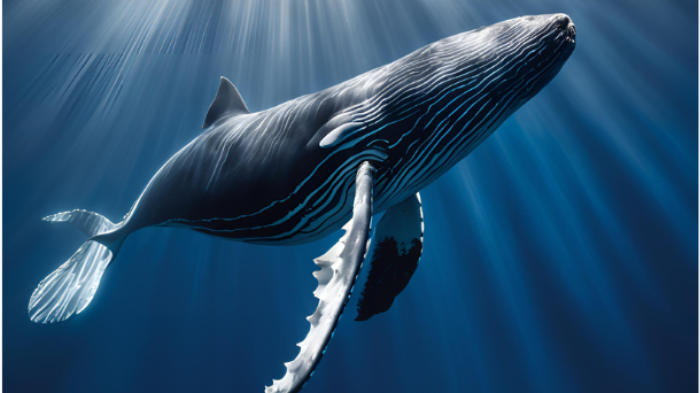
Can AI help us communicate with whales?
In this lesson, students will learn how AI is used to analyze whale soundwaves and detect patterns by identifying similar sounds. Students will have the opportunity to listen to real whale sounds and explore a research tool designed by Google, the National Oceanic and Atmospheric Administration (NOAA), and the Pacific Islands Fisheries Science Center (PIFSC). Through this exploration, students will consider the role of AI in marine research and understand why this technology is vital for conservation efforts.
- Created by Isabel Paz Reyes Sieh, CRAFT Student Designer 2022
- Adapted by Chris Mah
How can AI be used to help conserve natural ecosystems?
In this lesson, students will apply their knowledge about healthy ecosystems to understanding ways that AI can help conserve the natural world. After studying several example applications, they will engage in a discussion and simulation to evaluate the effectiveness of different AI applications in natural conservation.
- Created by Wendi Cocita, Middle School Science Teacher
- Adapted by Chris Mah